Tips and Guides about Self-Service Terminal Manufacturing Kenya
Peter Gitau · Soundc Andysi Ster · Nairobi
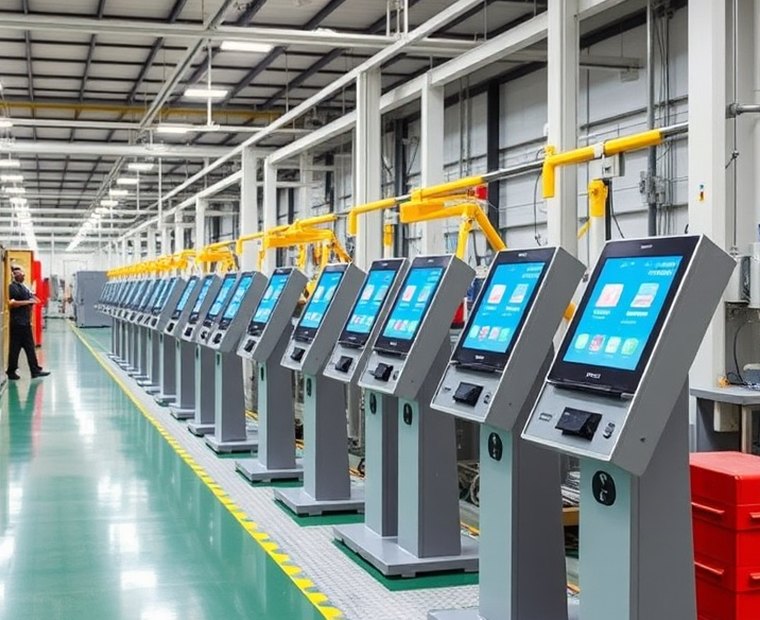
Designing for dust and heat
Equipment specified for a temperate indoor lobby behaves differently on a forecourt at thirty-five degrees with dust in the air. Seals matter, ventilation paths matter, and the tolerance of a mechanism to fine particles matters more than any figure on a datasheet. Treating those as design inputs rather than as exceptions is most of the difference in field failure rates.
Why availability is decided at the factory
How long a terminal stays stopped depends less on the technician's speed than people assume and much more on how the machine is built. A dispenser sized for the real volume of the site, a protected card reader and a fascia that lets modules be opened and swapped without stripping half the machine all shorten every intervention. Those decisions are made at the design stage, years before the first fault. It is one of the questions branches ask us most often: modules replaced rather than whole machines.
Modularity is a service decision made in engineering
A fault that takes fifteen minutes to clear, and one that takes a week, are separated by decisions made long before the fault happens. A design where the printer is reachable and the reader unclips is a design where the fleet stays in service. A sealed, elegant unit that must be returned to a workshop turns every minor failure into a logistics exercise across a country.